
Lens Guide
There are many types of lenses and finishes that are available. Here’s a breakdown of prescription types, materials and finishes.


Single Vision
Single vision lenses feature a single optical prescription throughout the entire lens. These lenses are designed to correct farsightedness (hyperopia) or nearsightedness (myopia), providing clear vision at one distance. Whether you need glasses for reading, working on a computer, or general use, single vision eyeglasses provide even focus across the entire lens surface, improving your daily vision needs.

Progressives
Progressive lenses, also known as multifocal lenses, seamlessly combine multiple vision corrections in one lens. Unlike bifocals or trifocals, progressive lenses have no visible lines or distinct areas, offering a smooth transition between different prescriptions. The lens power gradually changes from distance vision at the top to intermediate vision in the middle, and near vision at the bottom.
Top of the lens: For distance vision, such as driving or watching TV.
Middle of the lens: For intermediate vision, like working on a computer or seeing objects at arm's length.
Bottom of the lens: For reading or close-up tasks.
This design allows you to see clearly across your entire field of vision without needing to switch between multiple pairs of glasses, eliminating the visible lines found in bifocal and trifocal lenses.

Occupational
Specially designed for individuals who spend long hours at intermediate and near distances, such as working on a computer or reading. These lenses typically have two distinct prescriptions: one for intermediate vision (like for your computer screen) and one for near vision (for reading).
The intermediate portion of the lens allows you to view your computer screen clearly without the need to tilt your head uncomfortably. The bottom portion of the lens is optimized for reading, ensuring you can easily read documents or books with minimal head movement.
Since occupational lenses only include two prescriptions—unlike traditional progressive lenses, which have three—the corridors of clear vision are much wider. This means you can comfortably see more of your computer screen or page while reading without constantly adjusting your head position.

Anti-fatigue
Designed for individuals who don’t need a progressive or bifocal lens but still experience eye strain or fatigue, especially after long hours of work. These lenses provide distance vision just like regular single vision lenses, but with a slight power adjustment in the bottom part of the lens to support near vision tasks and help reduce visual fatigue.
This added support at the bottom of the lens helps alleviate the discomfort often associated with prolonged reading, computer use, or other close-up tasks, providing comfort without the need for a stronger prescription. Anti-fatigue lenses are perfect for people who want to stay comfortable and reduce eye strain throughout their workday.
Lens Enhancements

Photo-chromatic
Transition lenses, automatically adapt to varying light conditions when exposed to UV rays. These lenses respond to the surrounding light, transitioning from clear indoors to dark (available in shades like grey, brown, or green) when you step outside, and then returning to clear when you go back indoors.
All Transitions lenses block 100% of harmful UV rays, offering comprehensive protection for your eyes throughout the day. Whether you're looking for lenses to fit single-vision, progressive, or even non-prescription eyewear, photochromic lenses provide convenience and comfort for all prescription types.
Tints
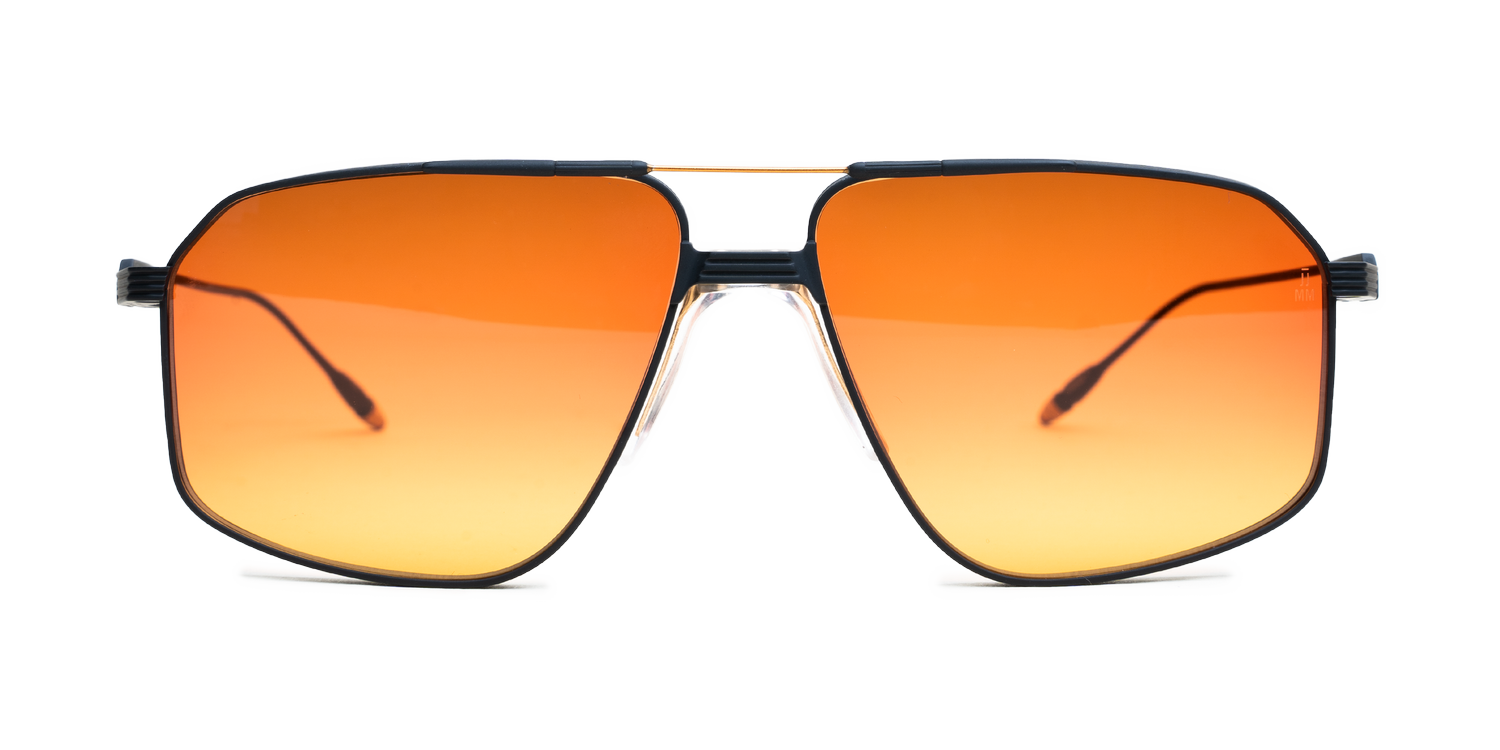
Tinted lenses are a stylish and functional way to personalize your eyewear. With a wide range of colors available, you can choose a tint that reflects your style and meets your specific vision needs. Tinted lenses contain a pigmented dye that slightly alters the color of the lens. While the color itself doesn't affect the level of protection, it can improve vision and comfort in various lighting conditions.
The most common tinted lens colors are brown and gray, but there are many options depending on your preference and the specific benefits you're seeking.
Benefits of Tinted Lenses:
Reduce Glare: Tinted lenses help minimize glare when exposed to excess light, improving comfort in bright environments.
Enhance Sports Performance: Certain tints, such as yellow or amber, can provide athletes with a competitive edge by enhancing contrast and depth perception.
Improve Contrast and Resolution: Brown lenses are known to improve contrast, making them ideal for activities like driving or outdoor sports.
Minimize Eyestrain: Amber lenses help reduce eyestrain, making them ideal for people who spend long hours on screens or in artificial lighting.
Relaxed Vision: Green lenses offer more precise and relaxed vision, particularly in variable light conditions like driving.
Other Lens
Enhancements
-
Anti-reflective (AR) lenses are glasses lenses that have a special coating applied to the surface to reduce glare and improve vision in bright light conditions. This coating helps to reduce the amount of light that is reflected off the surface of the lens, which can make it easier to see and reduce eyestrain. They can be especially helpful for people who spend a lot of time working on computers or driving at night, as they can reduce glare from the screen or headlights.
Benefits to using AR lenses:
Improved Vision: AR lenses can help to reduce reflections and glare, which can make it easier to see in a variety of lighting conditions. This can be particularly beneficial when driving at night or working on a computer.
Reduced Eyestrain: Reflections and glare can cause eyestrain, particularly when reading or working on a computer. AR lenses can help to reduce these distractions and improve overall eye comfort.
Enhanced Appearance: AR lenses can help to reduce reflections on the surface of the lens, making it easier to see the eyes of the person wearing the glasses. This can make the glasses look more attractive and improve the overall appearance of the wearer.
Improved Durability: AR lenses are more resistant to scratches and other types of damage, which can help to extend the life of the glasses.
UV Protection: Many AR lenses also provide some protection from UV light, which can help to protect the eyes from damage.
When applied to photochromic (transition) lenses, AR coating enhances the clarity, sensitivity or reaction time and their ability to fully lighten to clear.
When applied to sunglasses it eliminates glare from sunlight reflecting into your eyes from the back surface of tinted lenses when the sun is behind you.
Overall, AR lenses are a convenient and effective way to improve vision and reduce eyestrain in bright light conditions. They are a popular choice for many people who wear glasses and can be helpful for a wide range of activities.
-
Polarized lenses are a type of lens that is designed to reduce glare. Glare is caused by light reflecting off flat surfaces, such as the hood of a car or the surface of a body of water. This reflection can cause discomfort and difficulty seeing for some people, particularly when driving or engaging in outdoor activities. Polarized lenses work by only allowing vertical light waves to pass through the lens, which helps to reduce glare and improve visibility. They are often used in sunglasses and are popular among people who spend a lot of time outdoors or on the water. Polarized lenses can also reduce the amount of harmful UV light that enters the eye, which can help to protect against eye damage.
There are several benefits to using polarized lenses:
Reduced Glare: Polarized lenses are designed to reduce glare by only allowing vertical light waves to pass through the lens. This can help to improve visibility and reduce eyestrain when driving or engaging in outdoor activities.
Improved Safety: Glare can be a major distraction when driving and can make it difficult to see the road clearly. Polarized lenses can help to reduce glare and improve visibility, which can make driving safer.
Enhanced Comfort: Glare can be uncomfortable and cause eyestrain, particularly when engaging in outdoor activities. Polarized lenses can help to reduce glare and improve comfort.
UV Protection: Polarized lenses can also help to block harmful UV light, which can help to protect the eyes from damage.
Better Color Perception: Polarized lenses can help to reduce reflections and enhance color perception, making it easier to see colors accurately.
-
Mirror lenses also known as "flash" or "reflective" lenses, are lenses that have a reflective coating on the outside surface. This coating reflects light and reduces the amount of light that passes through the lens, which can make it easier to see in bright conditions. Mirror lenses are often used in sunglasses and other eyewear to reduce glare and improve visibility in bright sunlight. They are also popular among athletes and outdoor enthusiasts because they can help to reduce eyestrain and improve performance. Mirror lenses are available in a range of colors, including silver, gold, blue, and green, and can add a stylish element to eyewear.
There are several benefits to using mirror lenses:
Reduced Glare: The reflective coating on mirror lenses helps to reduce glare by reflecting light away from the eyes. This can make it easier to see in bright conditions and reduce eyestrain.
Improved Visibility: The reflective coating on mirror lenses can also help to improve visibility by reducing the amount of light that passes through the lens. This can make it easier to see in bright sunlight and other high-glare environments.
UV Protection: Mirror lenses can provide some protection from UV rays, which can help to protect the eyes from damage.
Stylish: Mirror lenses are available in a range of colors and can add a stylish element to eyewear.
Enhanced Performance: Mirror lenses can help to reduce eyestrain and improve performance in outdoor activities and sports.
-
Blue light is a subset of light emitted by the sun, as well as by computer, phone, and other electronic screens. This high energy blue light penetrates the cornea and lens to the retina that can cause diseases such as dry eye, cataract, age-related macular. This finish will help filter out blue light to effectively block the transmission of a range of wavelengths emitted from devices. Ultimately, blue light glasses can help you feel more refreshed after facing a screen all day.
Lens Types
-
Polycarbonate lenses are a type of plastic lens that is known for its durability and impact resistance. They are often used in safety glasses, sports eyewear, and children's eyewear because they are less likely to shatter or break than traditional glass lenses. Polycarbonate lenses are also much lighter in weight than glass lenses, which can make them more comfortable to wear. In addition to their durability and lightweight properties, polycarbonate lenses also provide 100% protection from UV rays and are scratch-resistant. They are also thinner and flatter than traditional lenses, which can improve the appearance of eyewear.
-
Trivex lenses are a type of plastic lens that is known for its durability, lightweight properties, and clarity. They are like polycarbonate lenses in many ways but are made from a different type of plastic called Trivex. Trivex lenses are also impact resistant and are less likely to shatter or break than traditional glass lenses. They are also lighter in weight than glass lenses and provide 100% protection from UV rays. In addition to these properties, Trivex lenses are also thinner and flatter than traditional lenses, which can improve the appearance of eyewear. Trivex lenses are often used in safety glasses, sports eyewear, and children's eyewear because of their durability and impact resistance.
-
High-Index 1.67 lenses are 45 percent thinner than plastic lenses. This lens material helps reduce the distortion others may see when looking at your eyes through your glasses.
Benefits of High-Index 1.67 lenses:
Their slim profile allows you to choose from a wider selection of frames
Light weight for added comfort
Flatter surface, so your lenses bulge less from the frame and your eyes appear more natural in size.
-
High-Index 1.74 lenses are the thinnest, flattest, lightest weight, and most cosmetically appealing lenses available. This material allows for a thinner lens, especially in extra-strong prescriptions.
An ultra-thin profile and ultra-light weight
Scratch resistance, UV protection, and anti-glare properties.